Half Dome Permits: The Complete 2026 Guide
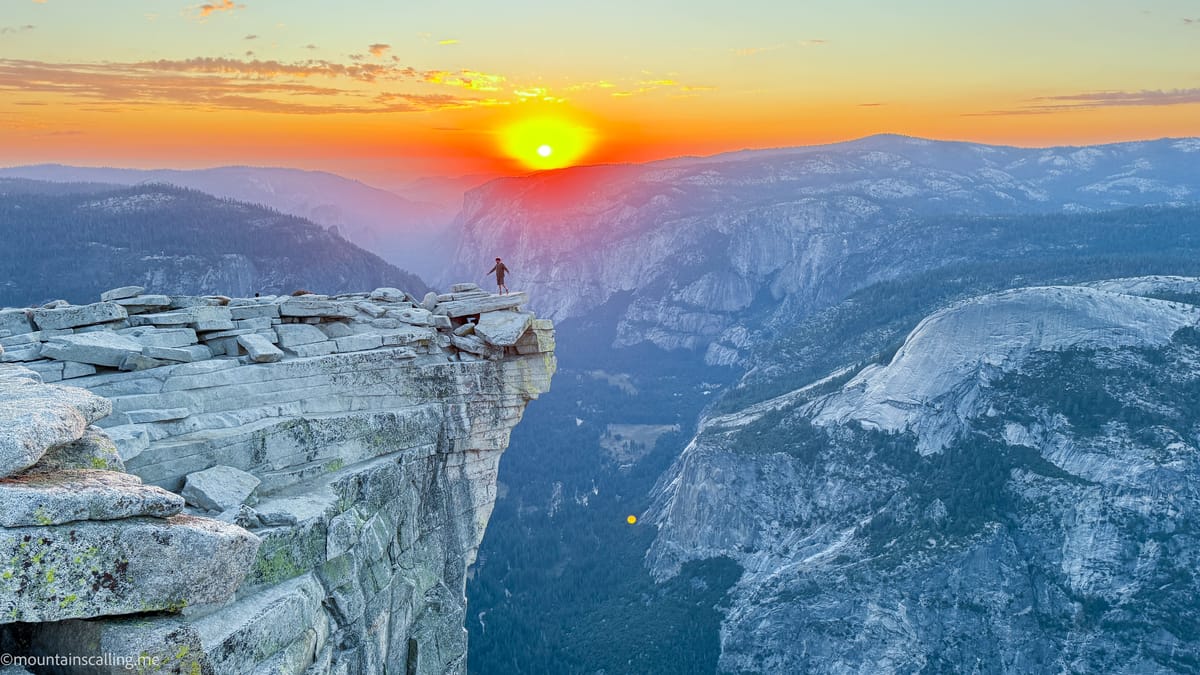
Standing on the summit of Half Dome is one of the most iconic experiences in Yosemite National Park.
But before you can go up the cables and step onto that famous granite summit, there’s one hurdle most hikers underestimate:
You have to get a permit first.
Every year tens of thousands of people apply to hike Half Dome - far more than the park allows beyond the base of the Sub Dome. The permit system exists to protect both hikers and the mountain itself, and understanding how it works improves your chances of actually standing on the summit.
In this guide I’ll walk through exactly how the Half Dome permit system works for 2026 - including:
- the day-hiker lottery
- the backpacker permit pathway
- quotas and odds
- the Sub Dome checkpoint rules
- cable season dates
- common mistakes people make when applying
Let’s start with the big picture.
The Half Dome Permit System (The Basics)
Permits are required seven days per week whenever the cables are up.
The park caps the number of hikers who can pass the base of Sub Dome each day at 300 people total.
Those permits are split between two groups:
| Type | Daily quota |
|---|---|
| Day hikers | ~225 |
| Backpackers | ~75 |
These permits are distributed through two completely separate systems:
- Day-hiker lottery system (through Recreation.gov)
- Backpacker add-on through wilderness permits
Both routes eventually lead to the same place: the Sub Dome permit checkpoint, where rangers verify your permit before you hike the cables.
Trying to pass that checkpoint without a permit is a federal violation that can carry fines up to $5,000 or six months in jail.
Half Dome Cable Season (2026)
While the cables are installed year-round they are "UP" seasonally each year.
For 2026 the expected dates are:
- Cables up: Friday, May 22, 2026
- Cables down: Tuesday, October 13, 2026
These dates are targets, not guarantees.
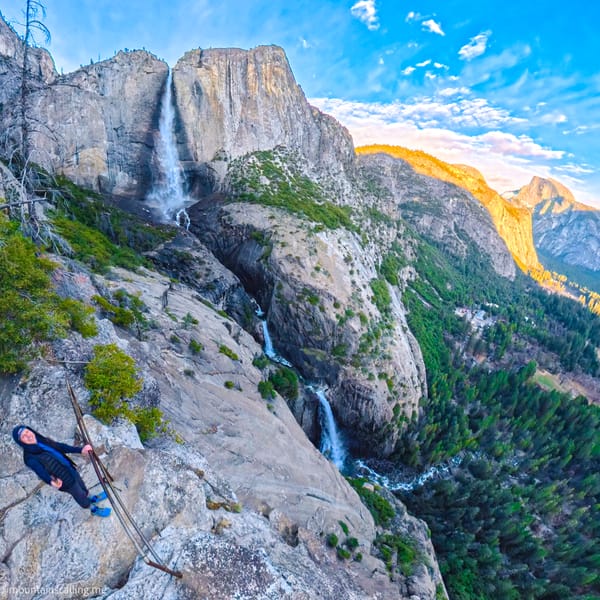
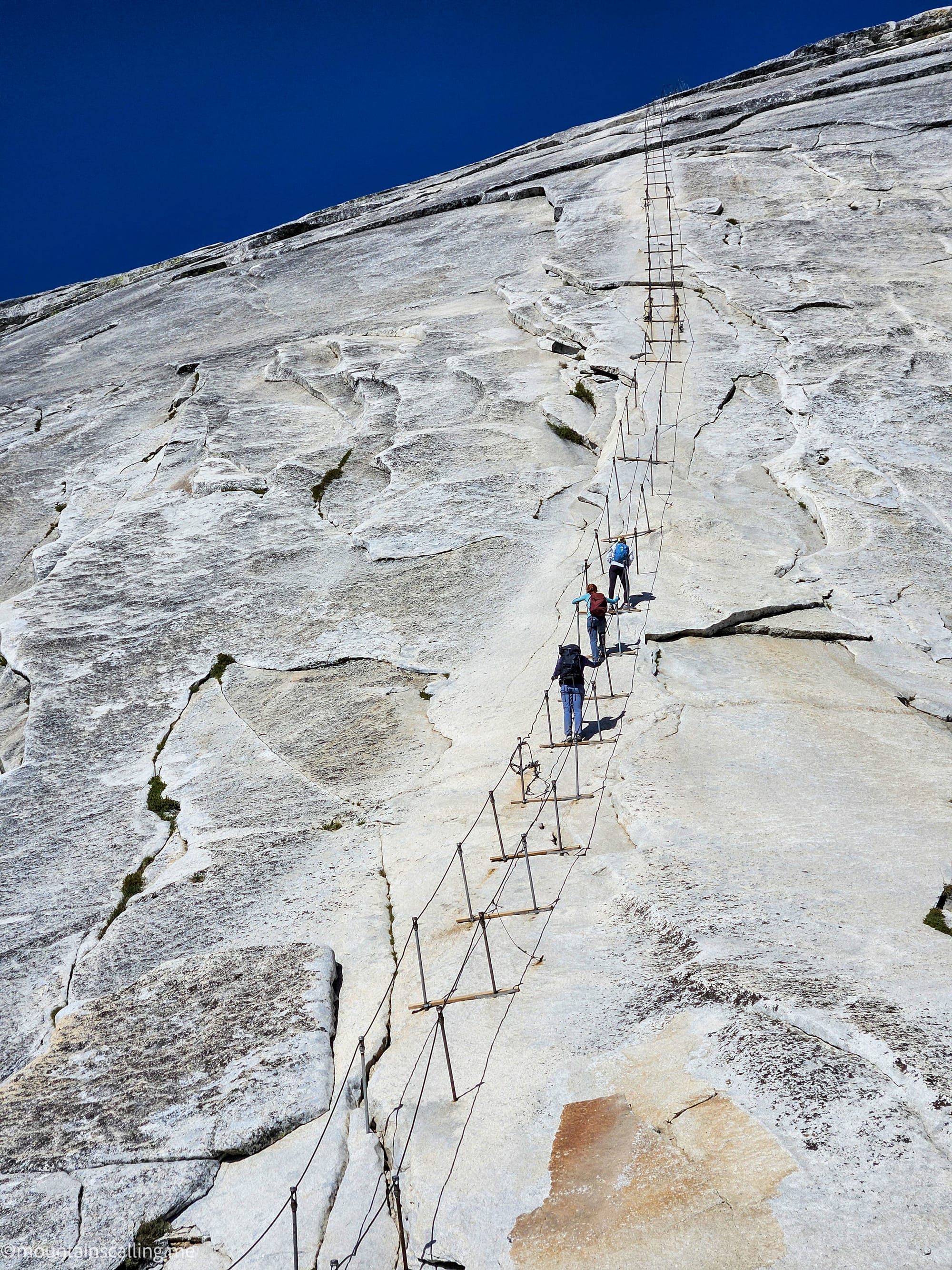
When the cables are UP there are metal posts holding the cables off the ground and a piece of wood stretches between posts giving hikers a place to perch. At places where the ground is uneven there is no cross-board.
Yosemite rangers and trail crews work on the cables only when conditions allow. In high snowpack years the installation can happen weeks later. In some years, cables have remained up longer than planned due to weather, operational or government staffing issues.
If you’re planning a late-May trip, always check current conditions before committing to a summit attempt.
Historical dates for Cables UP/DOWN can be found on NPS.gov/YOSE
Path #1: The Day-Hiker Permit Lottery
Most people who hike Half Dome do it as a long day hike from Yosemite Valley. These permits are distributed through a lottery system run on Recreation.gov.
There are two separate lotteries.
The Preseason Lottery
This is the main opportunity to secure a permit for the entire season.
2026 preseason lottery timeline
| Step | Date |
|---|---|
| Applications open | March 1, 2026 |
| Applications close | March 31, 2026 |
| Results announced | Mid-April 2026 |
Applicants can request up to seven specific dates or date ranges in a single application.
Preseason lottery costs
| Fee | Cost |
|---|---|
| Application fee | $10 (non-refundable) |
| Permit fee | $10 per person (charged only if selected) |
Group size limits
- Maximum group size: 6 people
- The lottery will only award permits if all requested permits are available for that date.
Alternates (Important)
The preseason lottery allows you to designate one alternate permit holder.
If the main permit holder can’t attend, the alternate can lead the group.
But there are strict rules:
- Alternates must accept the role within 72 hours
- Alternates count toward the one-application-per-person rule
- You cannot add or change an alternate after the application window closes
For some hikers, forgetting to add an alternate can be a mistake that ruins their permit.
The Daily Lottery
If you miss the preseason lottery or didn’t win, there’s still another chance.
The daily lottery happens two days before the hike.
Example:
- Want to hike Saturday?
- Apply Thursday between midnight and 4:00 PM Pacific.
Results are emailed later that evening.
These permits come from:
- cancellations
- unused preseason permits
- under-utilized quota
On average, about 50 permits per day become available this way.
Important daily lottery rule
The permit fee is charged automatically if you win.
If your credit card fails, the reservation is immediately forfeited.
There are no second chances.
What Are the Actual Odds?
The park publishes lottery statistics each year.
Based on recent data:
| Metric | Value |
|---|---|
| Preseason applications | 35,289 |
| Preseason success rate | 22% |
| Daily lottery applications | 35,561 |
| Daily lottery success rate | 19% |
However, those numbers can be misleading.
Because each application can request multiple dates, the odds of winning a specific date are closer to about 1% per individual date choice.
Weekdays - especially late season - have significantly better odds.
Detailed information about lottery odds can be found on NPS.gov/YOSE
Strategies for Actually Winning the Lottery
If you look at the lottery odds data, it's clear that no one thing will guarantee success. But, following these strategies can increase your chances.
1. Choose weekdays whenever possible
Weekend demand is dramatically higher.
If your schedule allows it, Tuesday through Thursday typically offer the best odds.
2. Use all seven date choices
Many people submit only one or two dates.
Always maximize your choices to improve odds.
3. Apply for smaller groups
Larger groups are harder to accommodate.
A group of two is much easier to place than a group of six.
4. Always include an alternate
Life happens. Someone gets sick, travel plans change, flights get cancelled.
Without an alternate, the entire permit becomes unusable.
5. Don’t double-apply
If your name appears on more than one application, every application involving that name is cancelled.
That includes appearing as an alternate.
Path #2: The Backpacker Route to Half Dome
There’s another way to legally hike Half Dome - and it’s often easier to secure.
Backpackers can access Half Dome by adding a Half Dome permit to an eligible wilderness permit.
This route is limited to about 75 permits per day.
But because it’s tied to wilderness permits rather than a lottery, the process works differently.
Eligible Trailheads
Only certain Yosemite trailheads qualify for the Half Dome backpacker add-on.
These include:
- Happy Isles → Little Yosemite Valley
- Happy Isles → Past LYV
- Glacier Point → Little Yosemite Valley
- Mono Meadow
- Sunrise Lakes
- Cathedral Lakes
- Rafferty Creek → Vogelsang
Backpackers starting outside Yosemite (for example from Inyo National Forest on the John Muir Trail) cannot use their permit to hike Half Dome.
How the Backpacker Half Dome Add-On Works
This part surprises many hikers.
You don’t reserve the Half Dome permit ahead of time.
Instead:
- Reserve a wilderness permit for an eligible trailhead
- Pick up your permit at a Yosemite wilderness center
- Request the Half Dome add-on at pickup. If your wilderness permit is eligible, rangers will usually ask you about Half Dome when issuing your permit.
Cost: $10 per person.
Unlike the day-hiker permits, this fee is not refundable.
One major advantage:
Your Half Dome permit is valid for any day your wilderness permit is active. You are allowed to go up Half Dome once - not unlimited.
The date flexibility makes it much easier to choose the best weather window. In practice, this is often one of the most reliable ways to hike Half Dome if you’re already planning a backcountry trip.
For a detailed guide on how to get wilderness permits check out: Yosemite Backpacking Permits: The Complete 2026 Guide
How Wilderness Permits Work
Backpacking permits follow a separate system.
Key rules include:
- 60% of permits released via weekly lotteries 24 weeks in advance
- Remaining lottery permits released first-come-first-served afterward
- 40% released seven days in advance
- Unclaimed permits may be available same day at wilderness centers
Reservation cost:
- $10 per permit
- $5 per person
My Own Half Dome Backpacking Trips
Because I guide backpacking trips through Yosemite Life, I reserve wilderness permits well in advance.
For the 2026 season I already hold multiple trailhead permits that are Half Dome eligible.
On those trips I handle:
- wilderness permits
- Half Dome add-ons
- route planning
- logistics
so clients don’t have to navigate the permit system themselves.
Learn more Yosemite Life backpacking trips including those which already have Half Dome eligible permits for 2026.
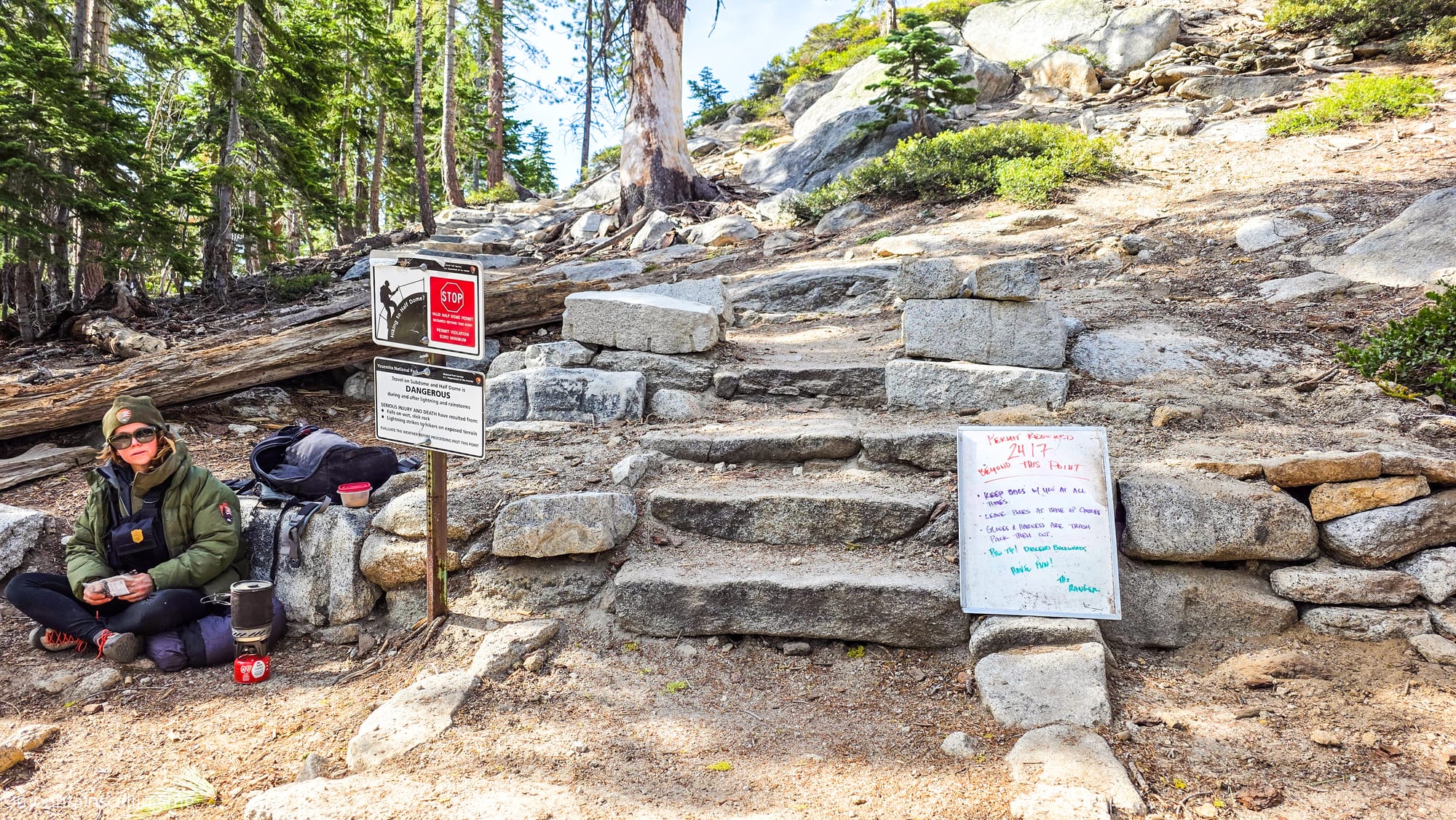
The Sub Dome Permit Checkpoint
All hikers - day hikers and backpackers - must pass the Sub Dome checkpoint before accessing the cables.
Rangers verify three things:
1. Government-issued ID
The permit holder or alternate must show an ID matching the permit name.
2. Permit confirmation
This can be:
- printed
- saved on your phone
But cell service is unreliable in this area, so download it before starting your hike.
3. Entire group present
Everyone in the permit group must pass the checkpoint together with the permit holder or alternate.
Pro tip:
I have frequently seen hikers wait at the Sub Dome checkpoint hoping to join groups with unused permit spots. For example, a group may have a permit for five people but only three show up, leaving two available slots.
I don’t recommend relying on this approach, but it does occasionally work.
What Happens if the Cables Are Wet?
The park does not close the cables due to weather.
Instead, hikers are responsible for deciding whether conditions are safe.
This matters because many serious accidents on Half Dome have occurred during storms.
Research by the National Park Service shows:
- Most major accidents happened when the cables were wet
- Five of ten fatal falls occurred during wet conditions
Lightning is another real danger. Three people have died from lightning strikes on the summit.
If thunderstorms are developing, the safest decision is simple:
DO NOT GO UP THE CABLES!
If it looks at all like possible rain or bad weather. Turn around. Go down.
Common Half Dome Permit Mistakes
Here are the biggest ones to avoid.
Applying multiple times
If your name appears on more than one preseason application, all of them are cancelled.
Forgetting an alternate
If the permit holder can’t attend and no alternate exists, the permit becomes useless.
Not downloading the permit
There’s no reliable cell service at Sub Dome.
Assuming any wilderness permit works
Only specific Yosemite trailheads qualify.
Trying to split the group
Everyone must pass the checkpoint together.
Ignoring cable conditions
Wet granite dramatically increases the risk on the cables.
One Important 2026 Change
For several years Yosemite required vehicle entry reservations during peak season.
That system is paused for 2026.
The Half Dome permit system itself remains unchanged, but higher visitation may mean:
- busier trailheads
- longer parking searches
- more competition for daily lottery permits
Planning early will matter even more.
Final Thoughts
Half Dome isn’t just one of the most famous hikes in Yosemite.
It’s one of the most famous hikes in the world.
The permit system can feel intimidating at first, but once you understand how it works, it becomes much easier to navigate.
If you’re planning to hike Half Dome in 2026:
- apply in the March preseason lottery
- keep the daily lottery in mind as a backup
- consider the backpacking route if you want a more flexible path to the summit
And if you’d rather skip the complexity of managing permits and logistics, some of my backpacking trips through Yosemite Life already include Half Dome-eligible wilderness permits. Learn more here.
Either way, the reward is the same.
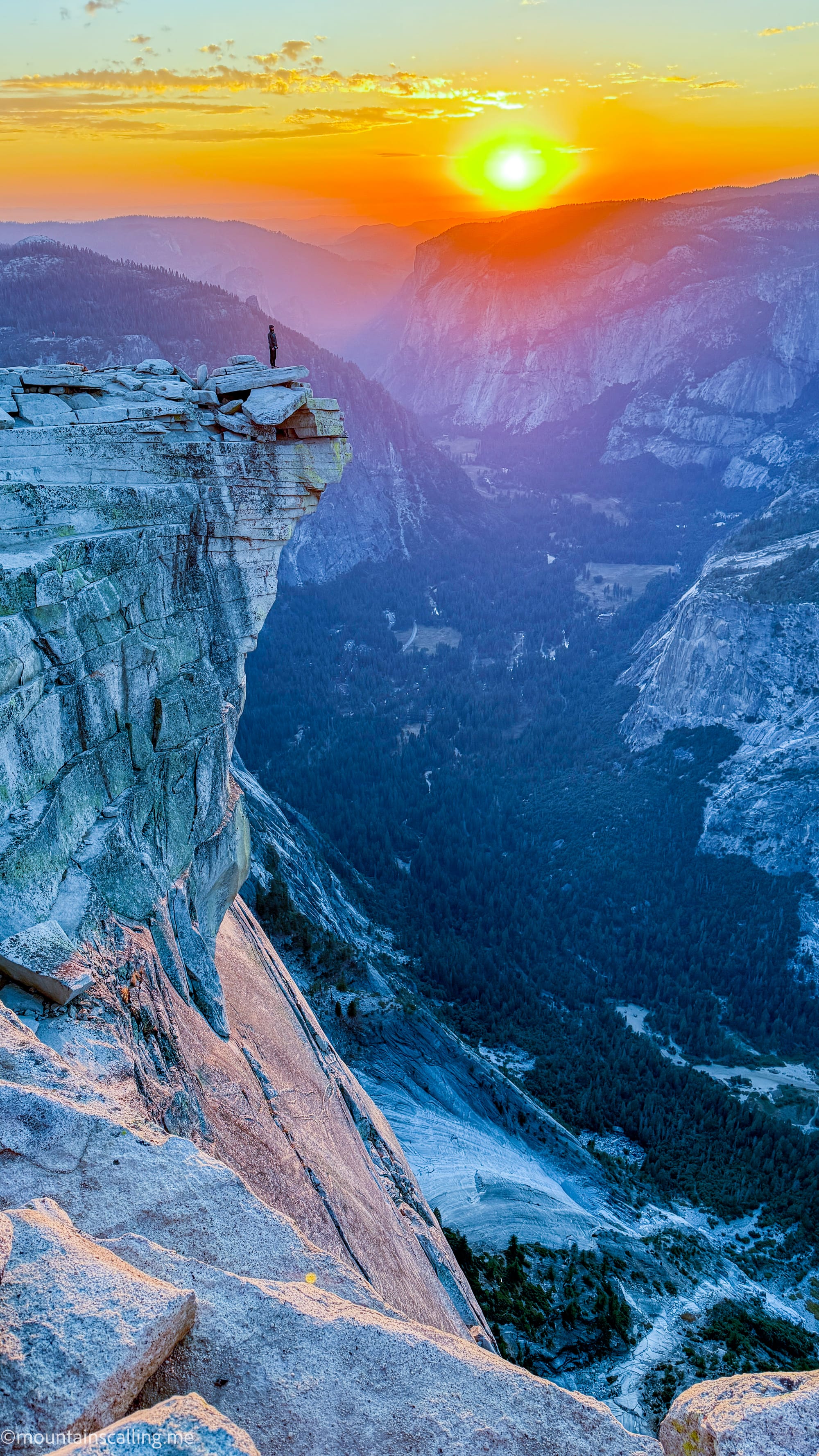
A view over Yosemite Valley, the Sierra stretching to the horizon, and the feeling of standing on one of the most extraordinary summits in the national parks.