Backpacking in Bear Country: Everything You Need to Know
The number one question I get during my livestreams I do from Yosemite backcountry is some version of: "What about the bears?"
Are there bears around? Have you seen any? Are you scared? What do you do if one shows up? Do you carry a gun?
Every single stream. Without fail. And my answer is always the same: I love bears. They don't scare me. When I see one, it makes me smile. And that I treat bears with respect, not fear.
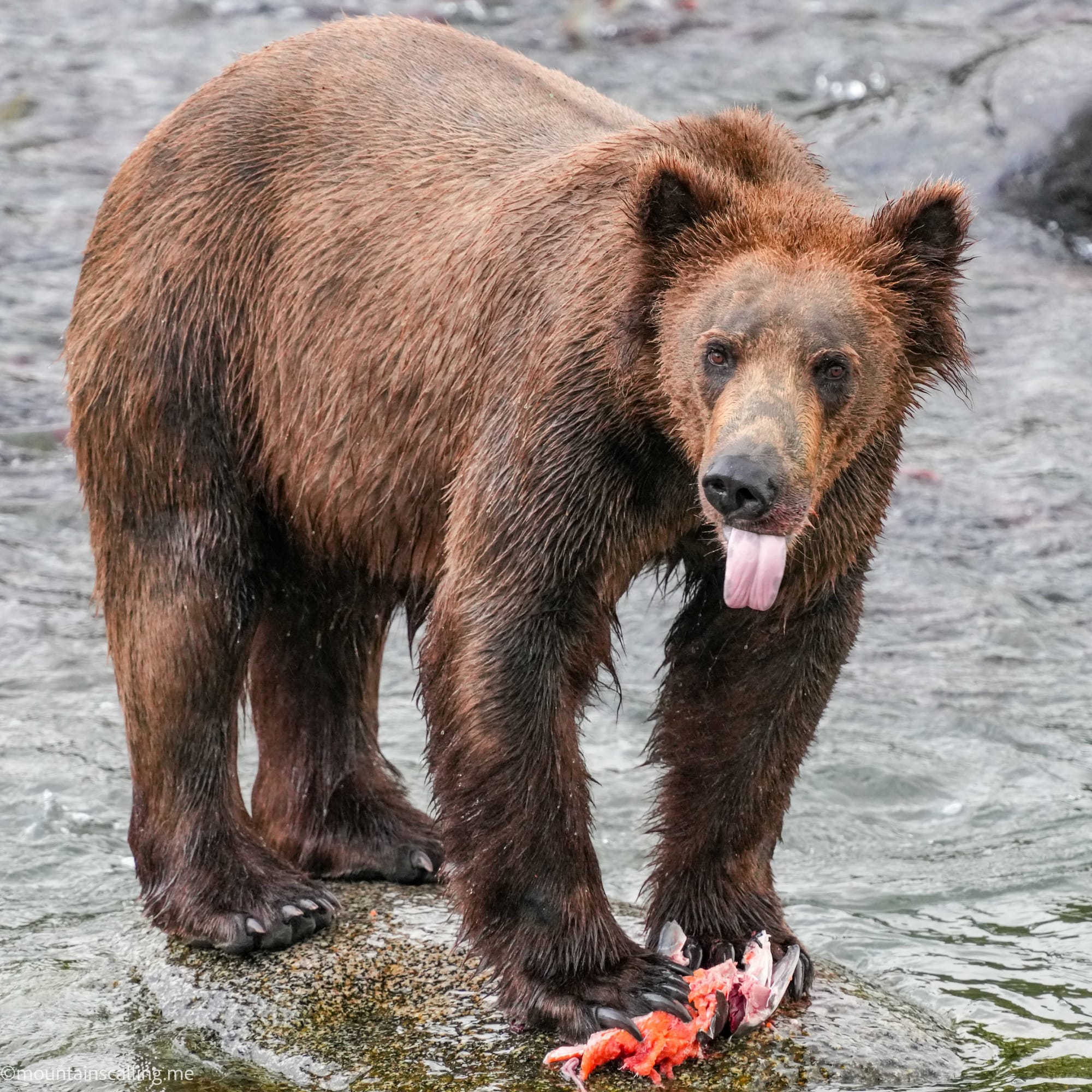
I say that as someone who has had more bear encounters than I can count across dozens of parks and years on trail. I've had a black bear bluff charge me in Kings Canyon National Park. I've had a massive brown bear at Katmai National Park walk past me at arm's length on a trail while my back was turned. I've had two Katmai bears suddenly bolt in my direction and run right past me before I could even move. I've sat at a off-trail campsite in Mount Rainier watching multiple bears forage within visual range. I've stood near the base of El Capitan and watched a bear dig through acorns in the oaks just 50 yards off from the base of El Cap. These aren't hypotheticals. Most of them are on video, on my TikTok, for anyone who wants to see what real bear encounters actually look like.
None of those moments ended badly. Not because I got lucky, but because I understood the animals I was sharing space with and acted accordingly.
That understanding is what this article is about. If you're planning a backpacking trip in Yosemite, or anywhere in bear country, this is everything you need to know: who these bears are, what the actual data says about your safety, how to store your food properly, and the specific protocols that keep both you and the bears safe. No panic. No hype. Just what works.
Yosemite's Bears: Who They Are
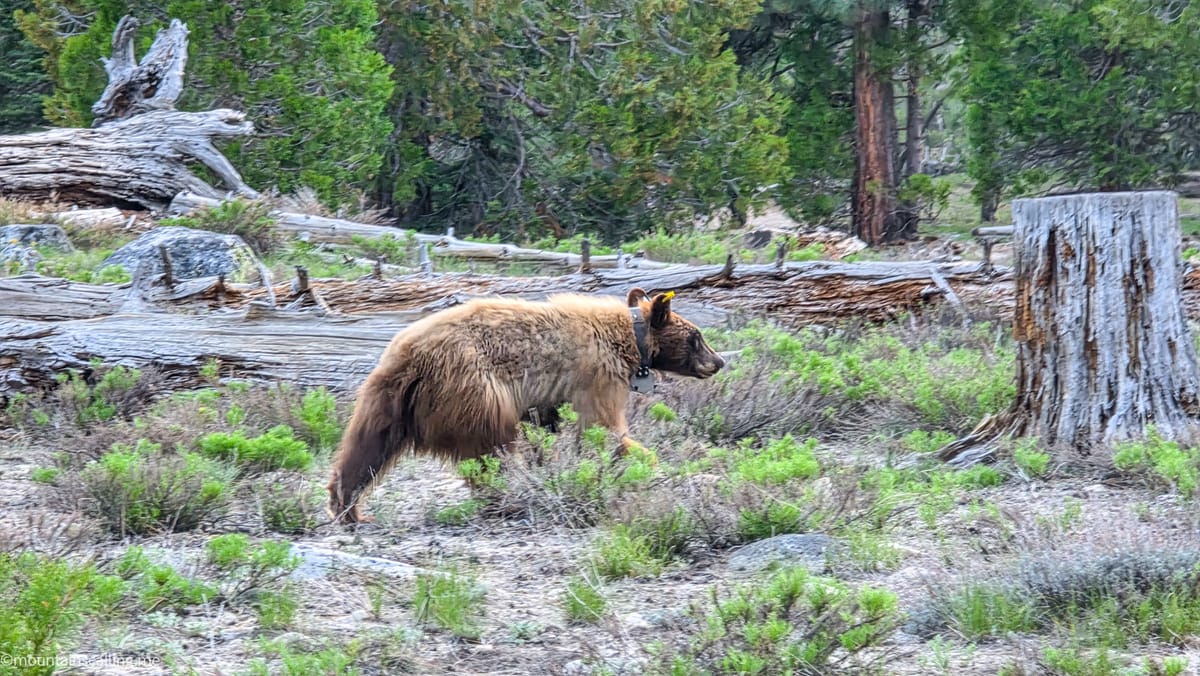
Yosemite National Park is home to an estimated 300 to 500 American black bears (Ursus americanus). That's the only bear species in the park. Despite the name "black bear," most of the bears you'll encounter in Yosemite are actually brown, cinnamon, or blonde in color. True black-coated bears exist here, but they're in the minority. The color of the fur has nothing to do with the species. If you see a bear in Yosemite, it is a black bear. Period.
Grizzly bears (Ursus arctos) once roamed the Sierra Nevada, but the last California grizzly was killed in the 1920s. The irony that the grizzly still sits on the California state flag is not lost on anyone. There are no grizzlies in Yosemite, no brown bears, and no need to prepare for them here.
Black bears are opportunistic omnivores. Their natural diet consists of grasses, berries, acorns, insects, grubs, and the occasional small mammal. During hyperphagia in the fall, they can consume up to 20,000 calories a day in preparation for winter hibernation. That caloric drive is what makes improperly stored human food so dangerous to bears. A single food reward from a backpacker's camp can rewire a bear's behavior and ultimately lead to that bear being killed. "A fed bear is a dead bear" is a common saying used by NPS Rangers which means feeding bears or allowing them to get human food will likely lead to their death.
The Numbers: How Safe Is Yosemite?
Let me give you the stat that matters most: there has never been a fatal bear attack in Yosemite National Park. Zero. In the entire recorded history of the park.
Since the 1980s, there have been roughly 15 documented bear attacks in Yosemite, and none resulted in death or serious injury. For context, the park receives over 4 million visitors per year. You are statistically more likely to be injured by a deer in Yosemite than by a bear.
What the park does track closely is "bear incidents," which is defined as any event where a bear causes property damage or obtains human food. In 1998, bear incidents in Yosemite peaked at over 1,500 in a single year, with more than $600,000 in property damage. Bears were breaking into cars, raiding campsites, and treating Curry Village like an all-you-can-eat buffet.
Since then, Yosemite's bear management program has driven incidents down by over 98%. In 2019, the park recorded its lowest number of incidents on record. The 2025 data through November showed 34 total incidents for the year, a fraction of what it was a generation ago. This dramatic improvement is the direct result of bear-proof food lockers, mandatory bear canisters in the backcountry, GPS collar tracking, and decades of visitor education.
The takeaway: the system works, but only when every single person in the backcountry does their part.
Not All Bears Are the Same: A Quick Species Comparison
If you plan to spend time in the outdoors across North America, understanding the differences between bear species will change how you prepare for each trip. Here's how Yosemite's black bears compare to bears you might encounter elsewhere.
American Black Bear (Ursus americanus) This is the bear of Yosemite, the Smokies, Shenandoah, and much of the eastern and western United States. Black bears are the smallest North American bear species. Adult males in the Sierra typically weigh 250 to 350 pounds, though the largest black bear ever captured in Yosemite weighed 690 pounds. Black bears are generally non-confrontational. Their survival strategy leans toward avoidance and retreat, and they are excellent tree climbers. They lack the prominent shoulder hump of a grizzly and have a straighter facial profile with taller, more prominent ears.
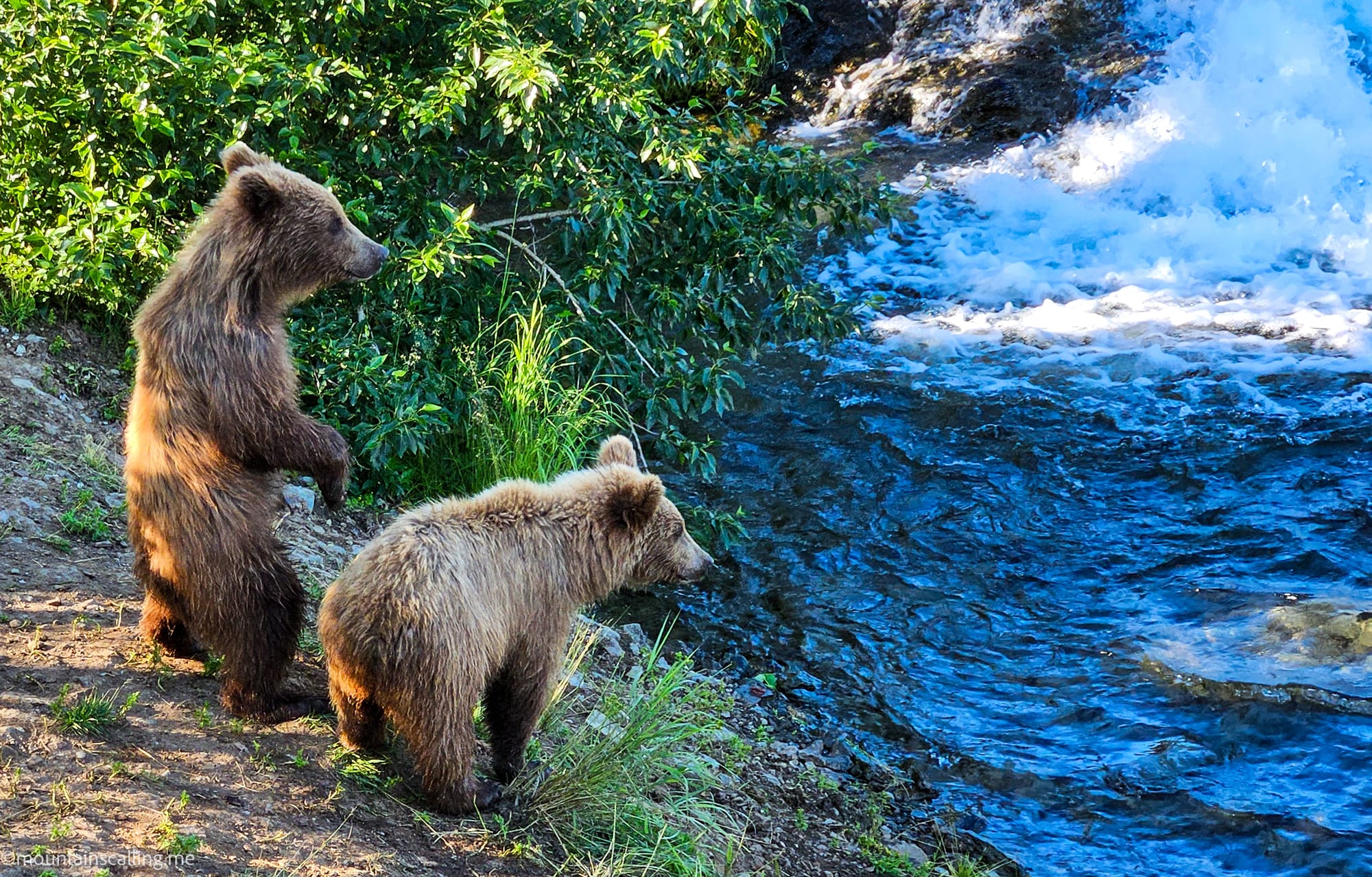
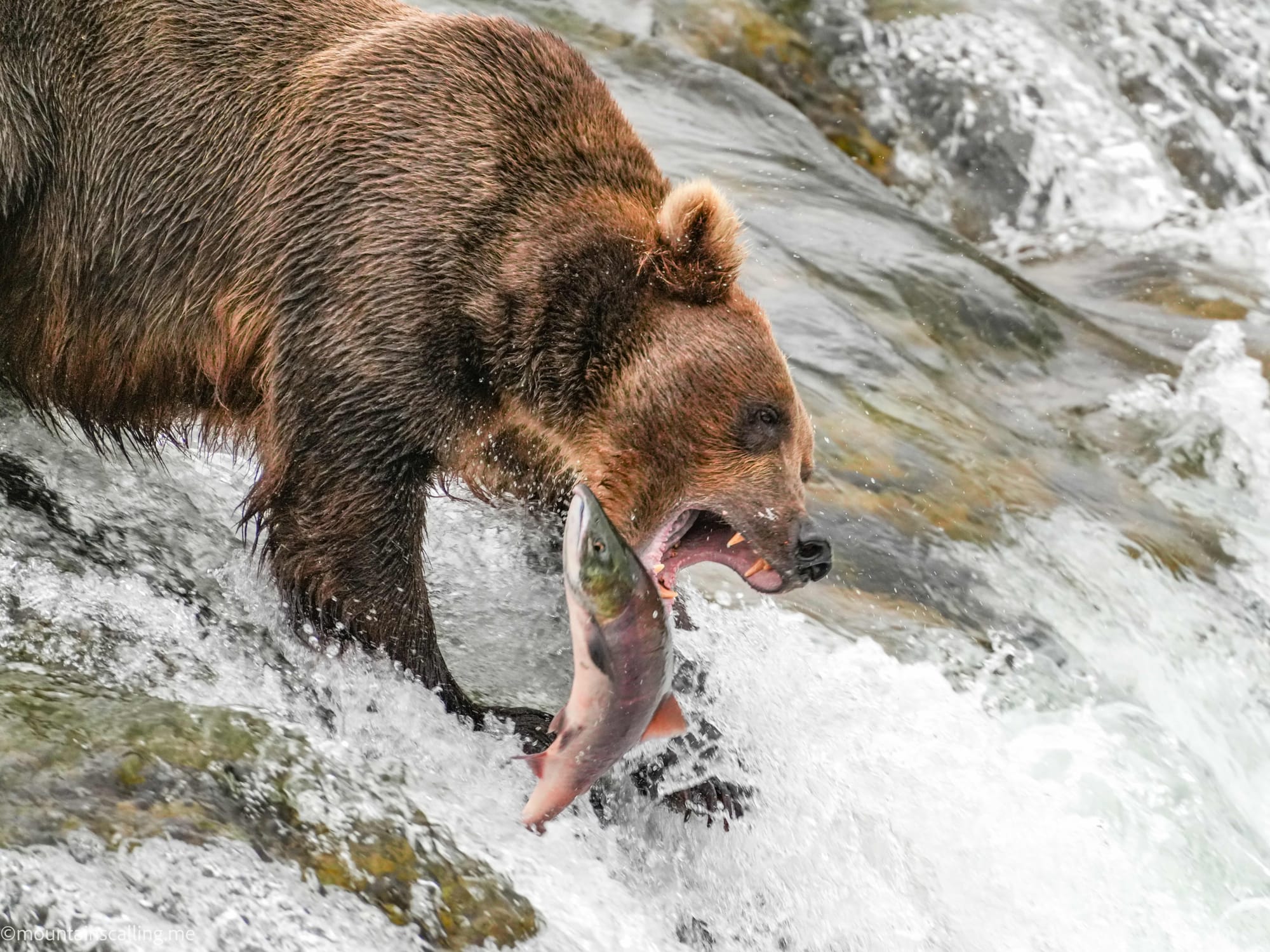
Brown/Grizzly Bear (Ursus arctos) Brown bears and grizzly bears are the same species. The distinction is geographic. Coastal populations in Alaska (think Katmai, Lake Clark, Kodiak) are called brown bears and can weigh up to 1,500 pounds thanks to salmon-rich diets. Inland populations in the Rockies and interior Alaska are called grizzlies and are typically smaller, ranging from 300 to 700 pounds. Grizzlies have a distinctive muscular shoulder hump, a concave (dish-shaped) facial profile, and longer, straighter claws built for digging rather than climbing. They are significantly more territorial and defensive than black bears, especially sows with cubs. Grizzlies are the reason bear spray exists.
You'll find grizzlies in Yellowstone, Glacier, Grand Teton, Denali, Katmai, and across much of Alaska and western Canada. If you're backpacking in any of those places, the protocols change significantly.
Polar Bear (Ursus maritimus) You're unlikely to encounter a polar bear on a backpacking trip unless you're doing something extremely adventurous in arctic Alaska or northern Canada. Polar bears are the largest land carnivore on earth. Males can exceed 1,500 pounds. Unlike black bears and grizzlies, polar bears are apex predators that may view humans as prey. They require an entirely different level of preparation, including armed guides in many cases. For the purposes of this article, just know they exist at the far end of the bear spectrum and are not relevant to anything you'll encounter in the Sierra.
Bear Safety in Yosemite: What to Do (and What Not to Do)
The single most important thing to understand about Yosemite's black bears is this: they are more afraid of you than you are of them. Bears in Yosemite have been conditioned through decades of management to associate humans with negative experiences (hazing, noise deterrents, rubber slugs). They want your food. They do not want you.
That said, a black bear is still a powerful animal that can weigh several hundred pounds and run up to 35 miles per hour. Respect is the operative word, not fear.
On the Trail
Talk, sing, clap your hands, or just have a normal conversation with your hiking partner. Bears will hear you coming and move off the trail long before you ever see them. If you spot a bear at a distance, give it space. Stay at least 50 yards away, which is roughly four shuttle bus lengths. Use your zoom lens, not your feet.
If you encounter a bear on the trail and it sees you, do not run. Running can trigger a prey response. Instead, stand your ground, speak in a calm but firm voice, and slowly back away. Make yourself appear larger by raising your arms. Give the bear a clear escape route. Never corner a bear or block its path.
If a bear approaches you in a developed area or near your campsite, get loud. Yell aggressively. Clap. Bang pots together. The goal is to make the bear uncomfortable enough to leave. This is not cruelty. This is what the park's own rangers do, and it is exactly what keeps bears wild and alive.
The Mom-and-Cubs Rule
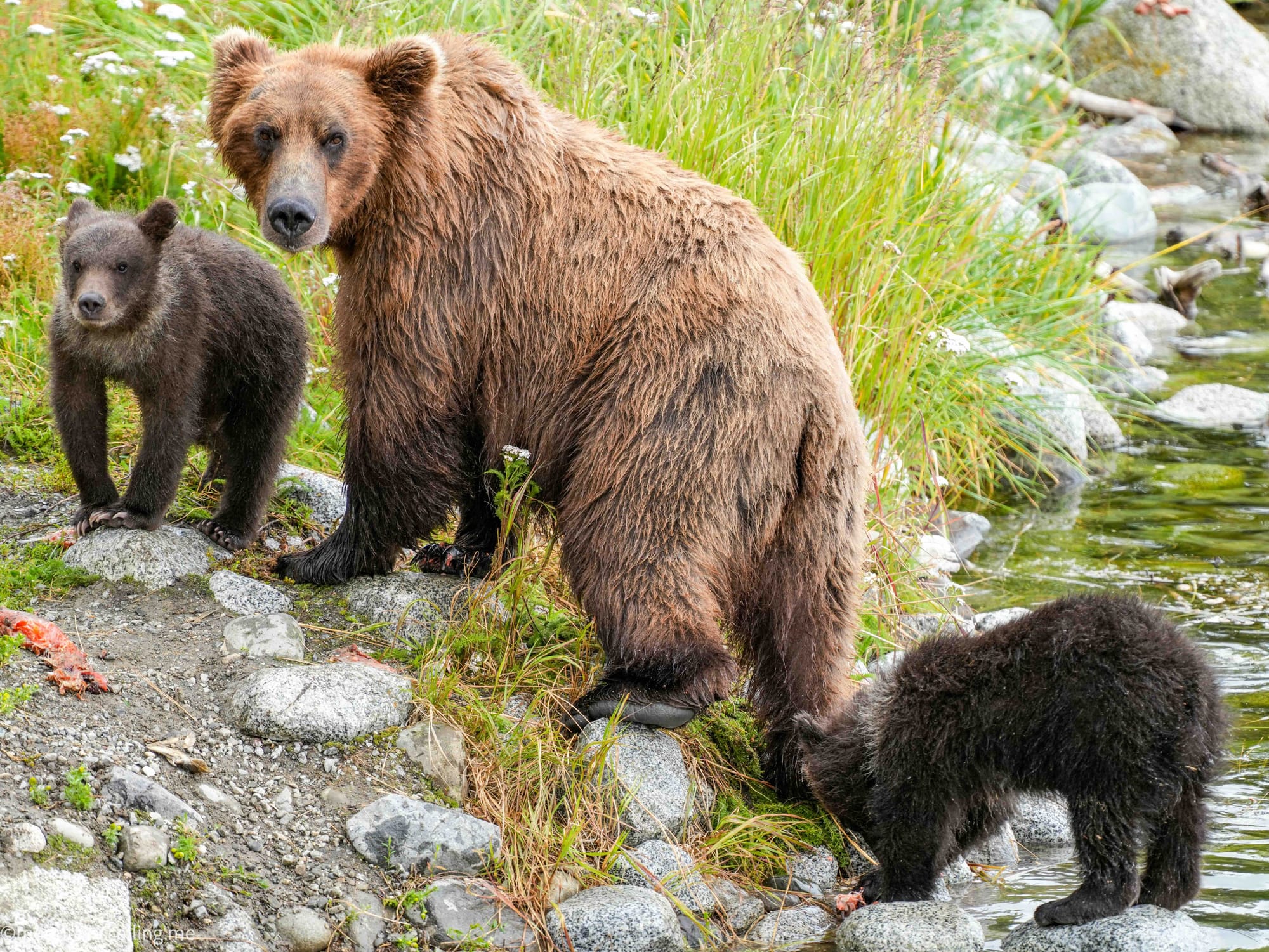
This is the one scenario where you need to be extra cautious. A mother bear with cubs is operating on a completely different level of alertness. Cubs are vulnerable, and she knows it. She will defend them against anything she perceives as a threat, and her threshold for what qualifies as a threat is much lower than a bear without cubs.
If you see a sow with cubs, do not approach. Do not try to photograph the cubs up close. Do not position yourself between the mother and her young. Back away slowly and give the family group a wide berth. This is the one situation in Yosemite where a bear may bluff charge or show defensive aggression. Respect that boundary absolutely.
What About Bear Spray?
This is where Yosemite diverges from almost every other major bear park in the country.
Bear spray is prohibited in Yosemite National Park. It is classified as a weapon under federal regulations, and possession, use, or discharge of bear spray (or any pepper spray) within park boundaries can result in fines, confiscation, or criminal charges. You cannot carry it on your person, in your pack, or even in your car inside the park.
The reasoning is straightforward: Yosemite has only black bears, which are not aggressive enough to warrant chemical deterrents. The park's management approach relies on education, proper food storage, and hazing rather than spray. Rangers in Yosemite do not carry bear spray.
This is different from parks like Yellowstone, Glacier, Denali, or Katmai, where grizzly bears are present and bear spray is strongly recommended (and sometimes required). If you're planning trips to those parks, bring bear spray and know how to deploy it. But for Yosemite, leave it at home.
Food Storage in the Backcountry: The Bear Canister
Proper food storage is not optional in Yosemite's wilderness. It is a legal requirement and the single most important thing you can do to protect both yourself and the bears.
The Rule
All food, trash, toiletries, and anything with a scent must be stored in an approved bear-resistant food canister whenever you're in Yosemite's wilderness. This applies 24 hours a day, not just at night. If it goes in your mouth or has a smell, it goes in the canister. That includes: food (obviously), toothpaste, sunscreen, lip balm, insect repellent, trash, food wrappers, and any scented items.
Hanging food from trees (the old "bear hang" method) is not allowed in Yosemite. Bears in the Sierra figured out counterbalance hangs decades ago. Some would send cubs up to the thinnest branches to shake food bags down. The park moved to mandatory canisters because they work and hangs don't.
In frontcountry campgrounds, you'll use the bear-proof metal food lockers provided at each site. That's a simpler situation and not the focus of this article.
How Bear Canisters Work
A bear canister is a hard-sided, cylindrical container made from durable polycarbonate or carbon fiber. It's designed to be smooth and round enough that a bear's jaws, claws, and paws can't grab on to it. The lid uses a locking mechanism that requires human dexterity (pressing tabs, turning screws) that bears haven't been able to defeat.
When you make camp, you place your loaded canister on the ground approximately 50 feet from your tent - not further. You want to be able to see it easily and keep an eye on it. You don't hang it. You don't hide it in your tent. You set it on a flat surface, ideally where you'd hear it if a bear decided to bat it around (which does happen). I have also placed my cook pot on top of it so it would make noise if disturbed. To my knowledge a bear has never messed with my bear canister in the wild over hundreds of nights of use.
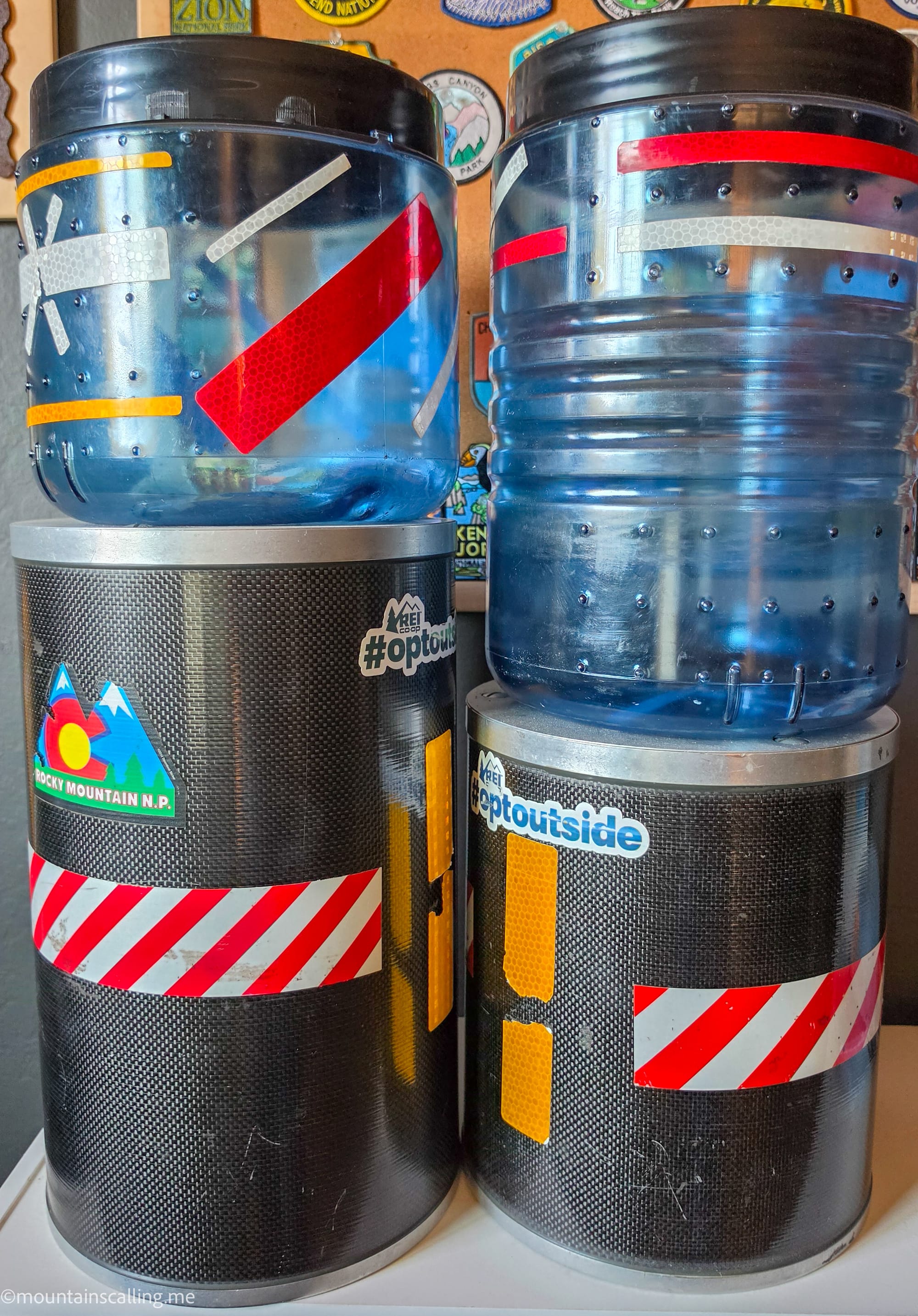
Pro tip: apply a few reflective stickers on your canister to make it easier to find in the dark.
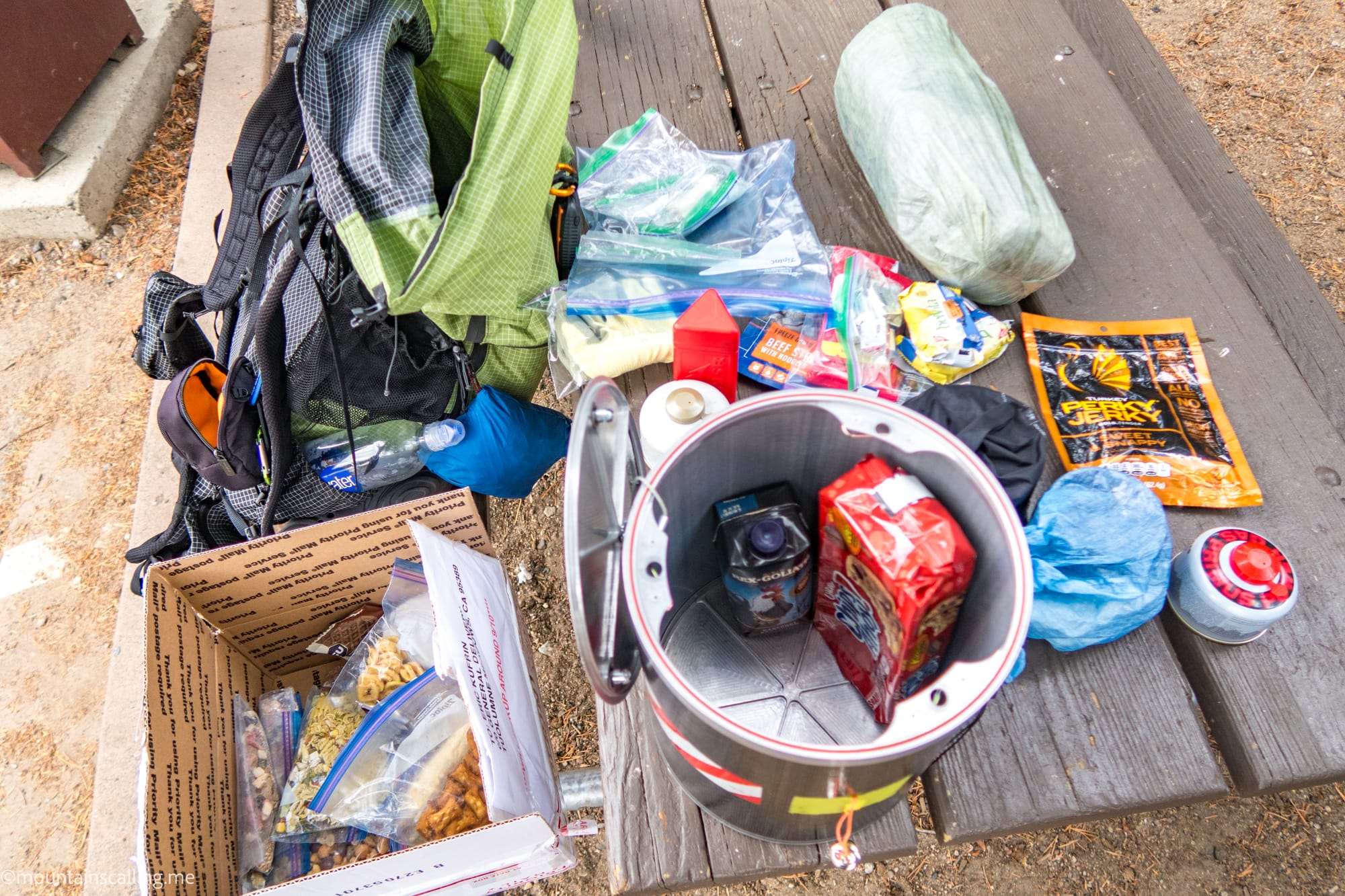
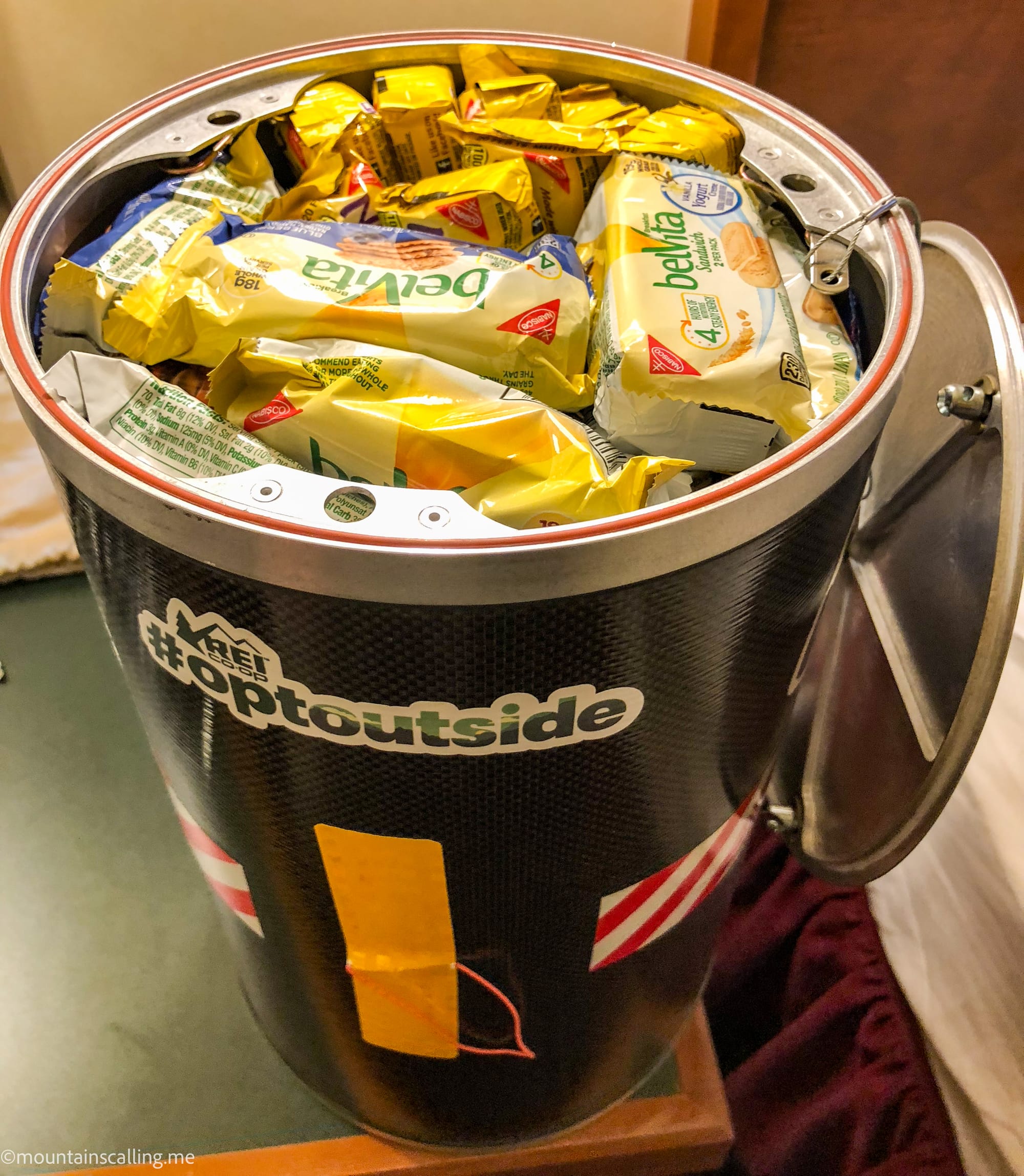
Resupply at Tuolumne Meadows while thru-hiking the John Muir Trail - Full bear canister | Yosemite Life
Popular Bear Canister Brands Approved for Yosemite
Yosemite maintains a specific list of approved containers. Not every canister on the market is approved, so check the NPS list before you buy or rent. The most common approved options include:
BearVault BV500 (Journey): The most popular canister on the market and the one I provide to clients on all of my guided backpacking trips through Yosemite Life. The BV500 is made from clear polycarbonate, weighs about 2 pounds 9 ounces, holds approximately 7 days of food for one person, and has a tool-free screw-top lid. The transparent body lets you see exactly what's inside without dumping everything out. It doubles as a surprisingly decent camp stool. It's approved by both the IGBC (Interagency Grizzly Bear Committee) and the SIBBG (Sierra Interagency Black Bear Group), which means it's legal in every national park that requires a canister, including Yosemite, Sequoia and Kings Canyon.
Garcia Backpackers' Cache (Model 812): The original bear canister. It's heavier and more opaque than the BearVault, but it's been around forever and is available for rent at Yosemite wilderness permit stations.
Bearikade (by Wild Ideas): Carbon fiber construction makes these the lightest hard-sided canisters available. The Weekender and Expedition models are approved for Yosemite. They're expensive to buy but can be rented directly from Wild Ideas.
Counter Assault Bear Keg, Bare Boxer, Lighter1, and UDAP No-Fed-Bear are also on the Yosemite approved list. Each has trade-offs in weight, volume, and price.
Yosemite also rents canisters at wilderness permit stations if you don't want to buy one. But if you're going to be doing any amount of Sierra backpacking, owning a BV500 is a worthwhile investment.
What Goes in the Canister
Everything with a scent. I'm serious about this. Here's a quick checklist:
All food and snacks. All beverages other than plain water. Trash, wrappers, and food-contaminated packaging. Toothpaste and toothbrush. Sunscreen and lip balm. Bug spray and DEET products. Deodorant. Hand sanitizer. Medications with a scent.
If you're unsure whether something counts, put it in the canister.
Backpacking with a Guide: What I Provide
Through Yosemite Life, I offer private day hikes and guided backpacking trips in Yosemite's wilderness. On every backpacking trip, I supply a Yosemite-approved BearVault BV500 bear canister for my clients to use. I walk every group through proper food storage, optimal canister loading and pack placement, camp setup, cooking protocols, and what to do if a bear shows up. Nobody goes into the backcountry with me without knowing exactly how to handle the bear situation.
You can learn more about available trips, pricing, and what's included at yosemite.life/2026-backpacking-trips.
Putting It All Together
Bears are not the enemy. They're one of the best parts of spending time in Yosemite's wilderness. Watching a wild black bear forage across a high Sierra meadow at golden hour, completely unbothered by your presence 100 yards away, is one of the most grounding experiences the outdoors has to offer. That bear was here long before you, and if we all do our jobs, it'll be here long after.
The rules are simple. Store your food in an approved canister. Keep a clean camp. Make noise on the trail. Give bears space. Yell if one gets too close. Never get between a mother and her cubs. And for the love of all that is wild, do not bring bear spray to Yosemite.
If you follow those protocols, the likelihood of a negative bear encounter is extraordinarily low.
Respect them. Learn about them. And go enjoy the backcountry knowing that you and the bears are going to be just fine.
Frequently Asked Questions
Are there grizzly bears in Yosemite? No. Yosemite has only American black bears. Grizzly bears once roamed the Sierra Nevada but the last California grizzly was killed in the 1920s. If you see a bear in Yosemite, it is a black bear.
Is bear spray allowed in Yosemite? No. Bear spray is prohibited in Yosemite National Park. It is classified as a weapon under federal regulations and possession within park boundaries can result in fines, confiscation, or criminal charges. Leave it at home for Yosemite — it is required in grizzly country like Yellowstone, Glacier, and Katmai.
Do I need a bear canister for backpacking in Yosemite? Yes. A bear-resistant food canister is legally required for all overnight wilderness use in Yosemite. All food, trash, toiletries, and anything with a scent must be stored in an approved canister 24 hours a day — not just at night.
What goes in a bear canister? Everything with a scent: all food and snacks, beverages other than plain water, trash and wrappers, toothpaste, sunscreen, lip balm, bug spray, deodorant, hand sanitizer, and scented medications. If you're unsure, put it in.
Where do I put my bear canister at camp? Place it on the ground approximately 50 feet from your tent on a flat surface where you can see it. Do not hang it, hide it in your tent, or bury it. Do not place it near a cliff edge where a bear could bat it into a ravine.
Has anyone ever been killed by a bear in Yosemite? No. There has never been a fatal bear attack in Yosemite National Park in the entire recorded history of the park. Since the 1980s there have been roughly 15 documented bear attacks, none resulting in death or serious injury.
What should I do if I encounter a bear on the trail? Do not run. Stand your ground, speak in a calm but firm voice, make yourself appear larger, and back away slowly. Give the bear a clear escape route. Never corner a bear or block its path. If a bear approaches your campsite, get loud — yell, clap, bang pots. This is exactly what park rangers do.
I'm Eric, Owner and Guide of Yosemite Life and a professionally permitted Yosemite guide. I offer guided backpacking trips for individuals and small groups who want to experience Yosemite's backcountry with someone who knows the wilderness, the bears, and the protocols inside and out. If you're ready to get into the backcountry and do it right, I'd love to take you.